Diverging Lens Ray Diagrams: A Complete Visual Guide
In this guide you’ll discover everything you need to master ray diagrams for diverging lenses—from the basic principles that govern how light bends, to a detailed step‑by‑step method for sketching accurate diagrams, common pitfalls to avoid, and real‑world applications. Whether you’re a physics student, an educator, or just curious about optics, this article will give you the confidence to draw, interpret, and use diverging lens ray diagrams with precision.
What Is a Diverging Lens?
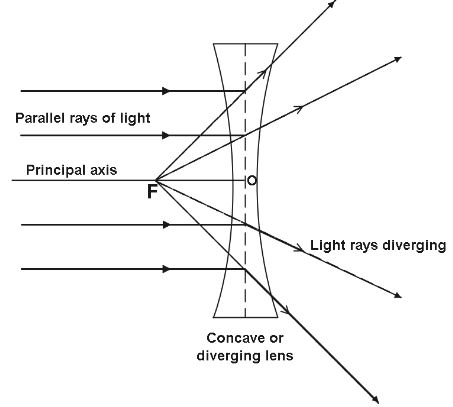
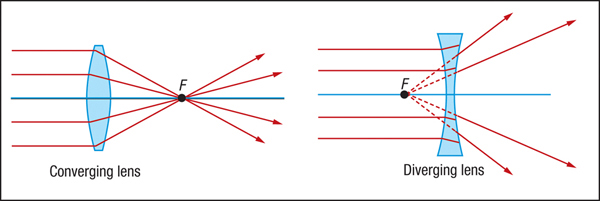
A diverging lens, also known as a concave lens, is a transparent optical element whose surfaces curve inward. Unlike convex lenses that converge light rays toward a focal point, diverging lenses spread incoming rays apart, causing them to appear to originate from a focal point located on the same side of the lens as the light source. This property makes diverging lenses essential for correcting myopia, creating wide‑angle camera lenses, and generating specific image characteristics in scientific instruments.
Key Optical Properties of Diverging Lenses
Understanding the fundamental parameters of a diverging lens is crucial for accurate diagramming:
- Focal Length (f): The distance from the lens to the point where parallel rays diverge to appear to originate. For diverging lenses, f is negative.
- Principal Axis: The straight line passing through the center of curvature and the lens center. All rays are measured relative to this axis.
- Principal Point: The central point on the lens where the principal axis intersects.
- Optical Axis: Often used interchangeably with the principal axis, it serves as the reference line for constructing ray paths.
Illustrative Ray Diagram Example
Before diving into the construction steps, let’s examine a ready‑made ray diagram for a diverging lens. This example highlights the key rays typically used in optics: the incident ray parallel to the principal axis, the ray passing through the principal point, and the ray directed toward the center of curvature.

How to Draw a Ray Diagram for a Diverging Lens
Constructing a clear, accurate diagram involves a systematic approach. Below is a concise checklist of the essential steps you’ll need to follow.
Step 1: Establish the Lens and Axes
Begin by drawing a horizontal line to represent the principal (optical) axis. Center a vertical line on this axis to depict the lens. Mark the lens center (C) and the principal points on either side of the lens.
Step 2: Add the Focal Points
Place two points on the principal axis, one on each side of the lens, at a distance equal to the absolute value of the focal length (|f|) from the lens center. For a diverging lens, label the left focal point F₁ and the right focal point F₂ with negative sign notation in your notes to remind yourself of the virtual focal point.
Step 3: Draw the Incident Ray Parallel to the Axis
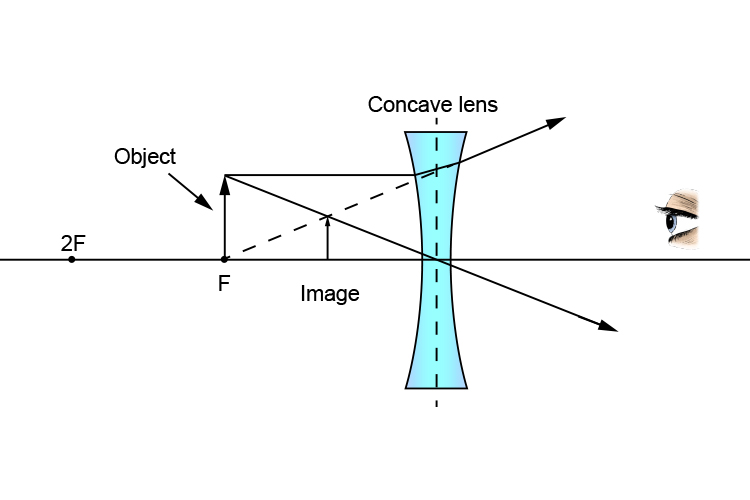
From a point on the object side, draw a ray that runs parallel to the principal axis until it reaches the lens. After passing through the lens, this ray should diverge and seem to originate from the focal point on the same side as the incoming light.
Step 4: Sketch the Ray Through the Lens Center
Draw a straight line from the same point on the object side directly through the lens center (C). This ray will continue in a straight line, unaffected by the lens.
Step 5: Include the Ray Toward the Focal Point
Plot a ray from the same object point aimed at the focal point on the lens’s side opposite to the incoming light. After passing through the lens, it will emerge parallel to the principal axis.
Step 6: Identify the Image Location
The intersection of the extensions of the two diverging rays (after passing through the lens) determines the position of the virtual image. Since the image is formed on the same side as the object, it appears behind the lens in the diagram.
Step 7: Label All Elements Clearly
Annotate the principal axis, focal points, lens center, incident rays, emerging rays, image point, and object point. Use consistent notation to make the diagram easy to interpret.
Illustrated Example of the Complete Diagram
Below is a finished example of a diverging lens ray diagram illustrating all the steps described. This diagram serves as a template you can adapt to different focal lengths and object distances.

Common Mistakes and How to Avoid Them
Even experienced students sometimes fall into common pitfalls when drawing diverging lens diagrams. Here are some typical errors and tips to keep your diagrams accurate:
- Misplacing the Focal Points: Remember that the focal points for diverging lenses are virtual and lie on the same side as the incoming rays. Double‑check the negative sign convention in your calculations.
- Incorrect Ray Paths: The ray that comes in parallel to the axis should diverge after the lens, appearing to originate from the focal point. The ray heading toward the focal point should emerge parallel to the axis.
- Omitting the Image Position: Always extend the diverging rays to find their intersection. Without this, you can’t locate the virtual image.
- Drawing a Curved Lens Instead of a Straight Line: While diverging lenses are physically curved, in ray diagrams you typically represent the lens as a thin vertical line. Curving the line can add confusion unless you’re illustrating the lens shape.
Applications of Diverging Lens Diagrams in Real Life
Diverging lens diagrams aren’t just academic—they’re indispensable tools in a variety of fields:
- Vision Correction: Optometrists use ray diagrams to design concave glasses for people with nearsightedness, ensuring the light focuses properly on the retina.
- Lens Ray Diagrams: Converging & Diverging Lenses Explained | PDF
Lens Ray Diagrams: Converging & Diverging Lenses Explained | PDF
How To Draw Diverging Lens Ray Diagram
How To Draw Diverging Lens Ray Diagram
Diverging Lens Object Inside Focal Point

Diverging Lens Object Inside Focal Point
Exploring The Rays Of Diverging Lenses: An In-depth Diagram Analysis

Exploring the Rays of Diverging Lenses: An In-depth Diagram Analysis
Ray Diagrams For Diverging Lenses

Ray Diagrams For Diverging Lenses
Diverging Lens Ray Diagram

Diverging Lens Ray Diagram
Diverging Lens Application

Diverging Lens Application
Convex Lens Ray Diagram

Convex Lens Ray Diagram
Lens Diagram Questions At Troy Jenkins Blog

Lens Diagram Questions at Troy Jenkins blog
Diverging Lens Ray Diagram

Diverging Lens Ray Diagram
Converging And Diverging Lenses Ray Diagrams Worksheet Answers - Prntbl

Converging And Diverging Lenses Ray Diagrams Worksheet Answers - prntbl ...
Double Concave Lens Ray Diagram

Double Concave Lens Ray Diagram
Diverging Lens Ray Diagram Ray Diagrams For Mirrors Worksheets Made By
Diverging Lens Ray Diagram Ray Diagrams For Mirrors Worksheets Made By
Rules For Drawing Ray Diagram In Convex And Concave Lens - Teachoo

Rules for drawing Ray Diagram in Convex and Concave Lens - Teachoo
Ray Diagram For Diverging Lens At Wilton Jennings Blog
Ray Diagram For Diverging Lens at Wilton Jennings blog
Diverging Lens Ray Diagram

Diverging Lens Ray Diagram
Converging And Diverging Lenses Ray Diagrams

Converging And Diverging Lenses Ray Diagrams
Diverging Lens

Diverging Lens
PPT - Locating Images In Diverging Lenses Using Ray Diagrams - Grade 10

PPT - Locating Images in Diverging Lenses Using Ray Diagrams - Grade 10 ...
Diverging Lens Shape
Diverging Lens Shape
Diverging Lens Application

Diverging Lens Application
Ray Diagrams For Convex Lens Online Science Home Work Images Formed By

Ray Diagrams For Convex Lens Online Science Home Work Images Formed By
Exploring Ray Diagrams For Diverging Lenses: A Comprehensive Answer Guide

Exploring Ray Diagrams for Diverging Lenses: A Comprehensive Answer Guide
How To Draw Diverging Lens Ray Diagram

How To Draw Diverging Lens Ray Diagram
Diverging Lens

Diverging Lens
Diverging Lenses Ray Diagrams Vector Illustration Stock Vector (Royalty

Diverging Lenses Ray Diagrams Vector Illustration Stock Vector (Royalty ...

