Comprehensive Guide to Volcano Diagrams: Understanding the Anatomy and Eruption Processes
In this guide, you will learn how to read and interpret volcano diagrams, explore the main components that make up a volcano, and understand the differences between dormant and active volcanic structures. We’ll break down each section of the cross‑section diagram, explain key volcanic features, and discuss how scientists use these visual tools to monitor potential eruptions and mitigate risks.
1. Overview of Volcano Anatomy
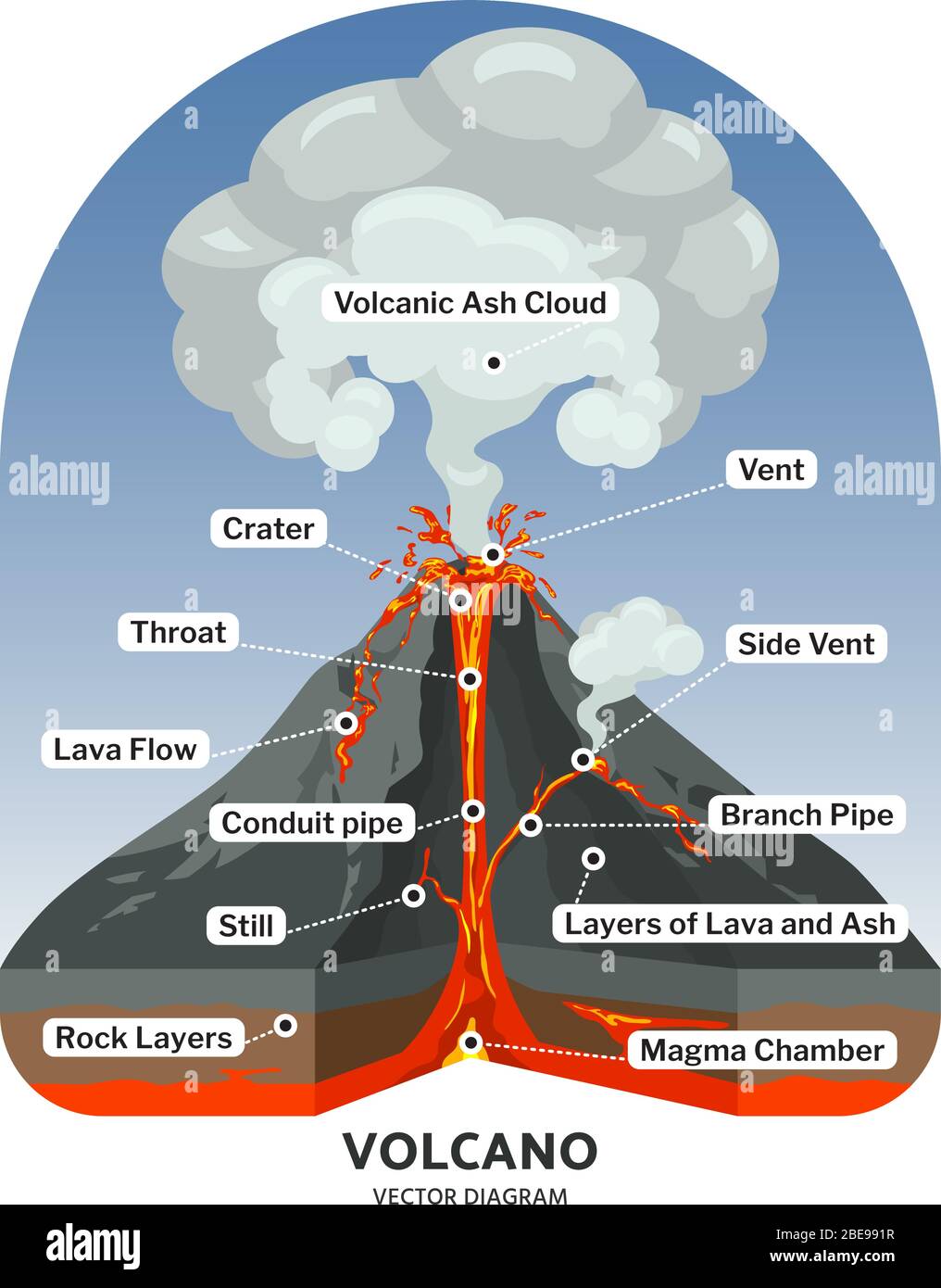
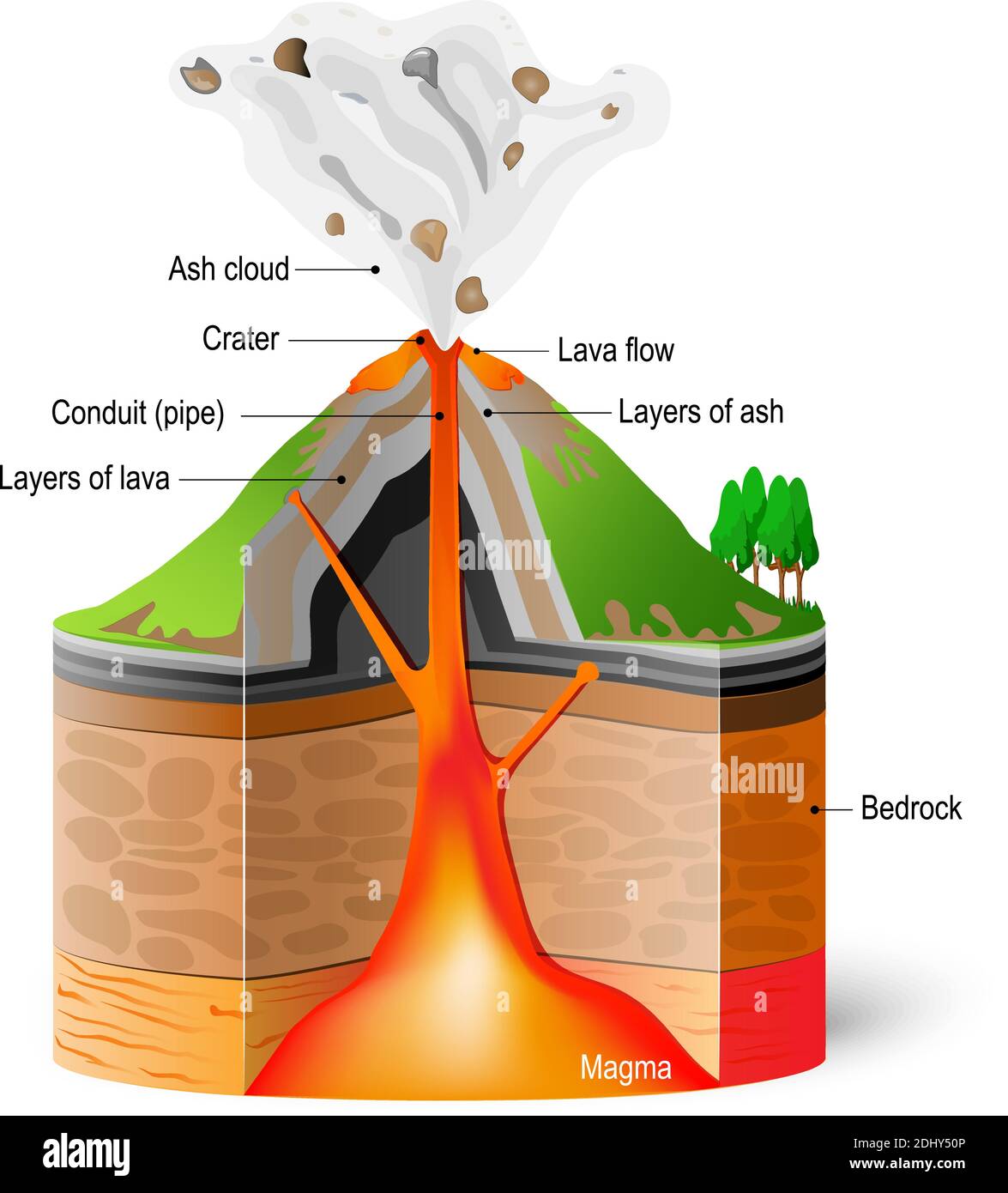
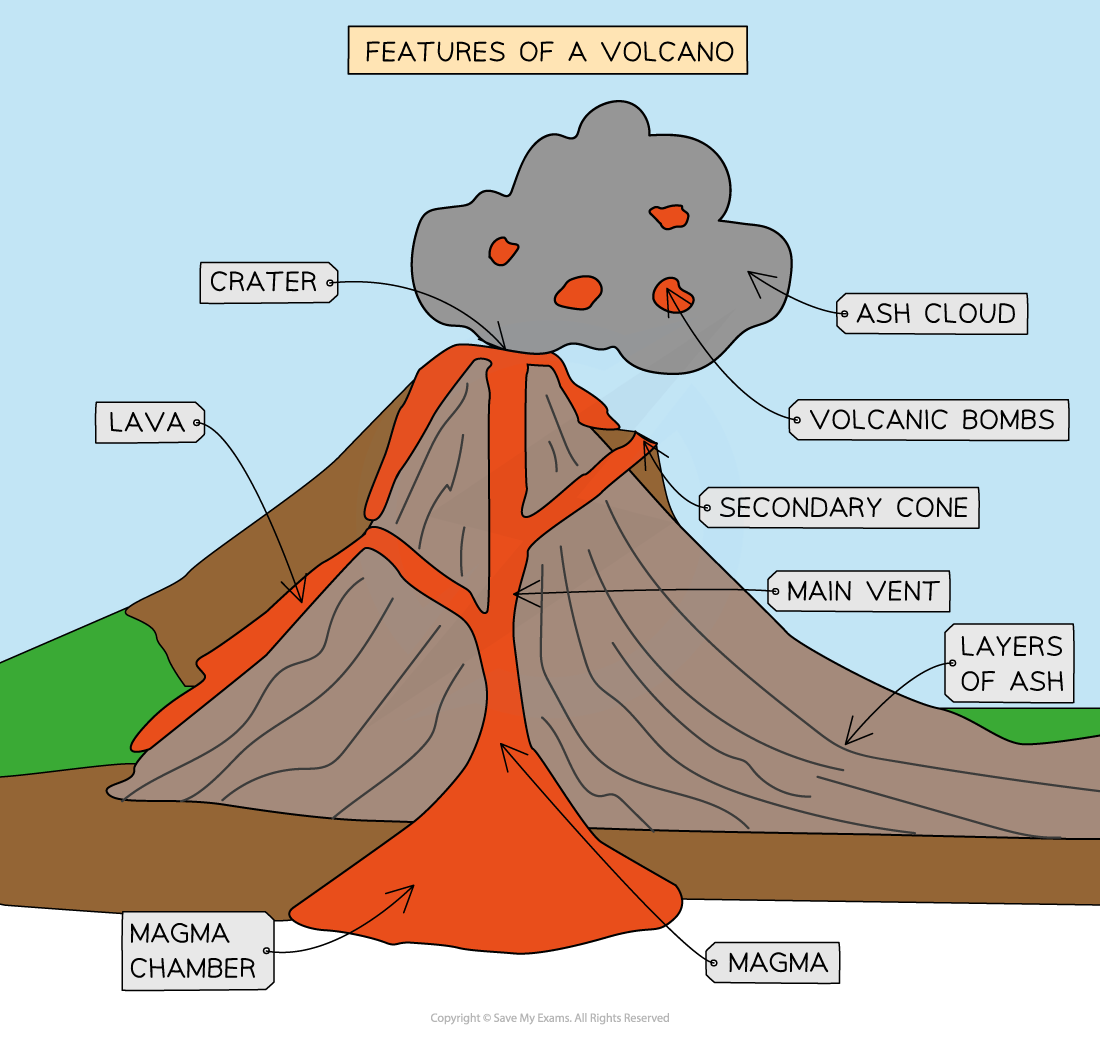
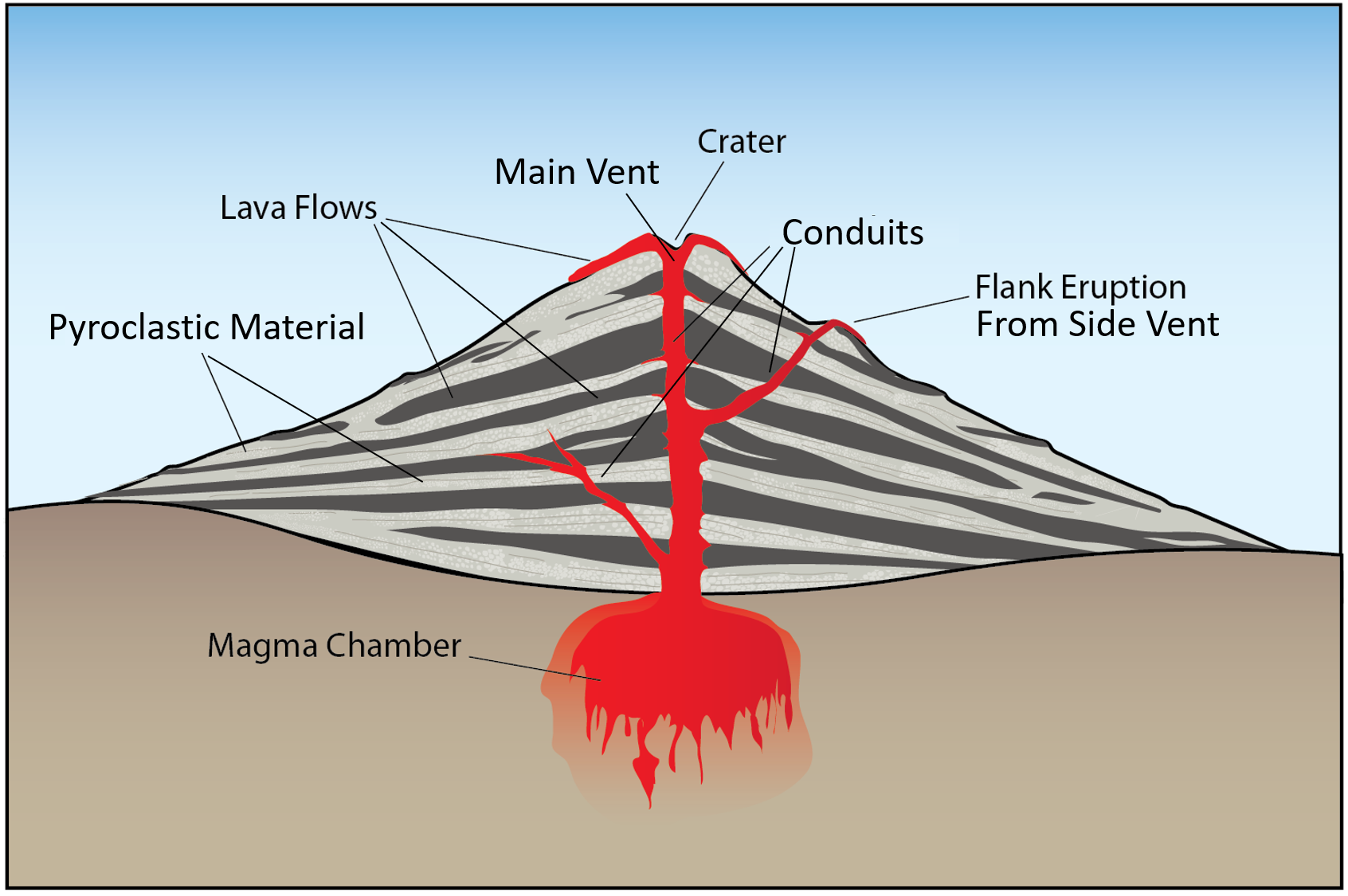
A volcano is essentially a vent through which magma, ash, and gases escape from the Earth's interior to the surface. The diagram presented below illustrates a typical stratovolcano, where layers of hardened lava, ash, and tephra build a steep-sided cone. Understanding the basic elements—such as the magma chamber, conduit, vent, and surrounding rock layers—provides the foundation for interpreting more detailed volcanic diagrams.

2. Cross‑Section Diagram Explained
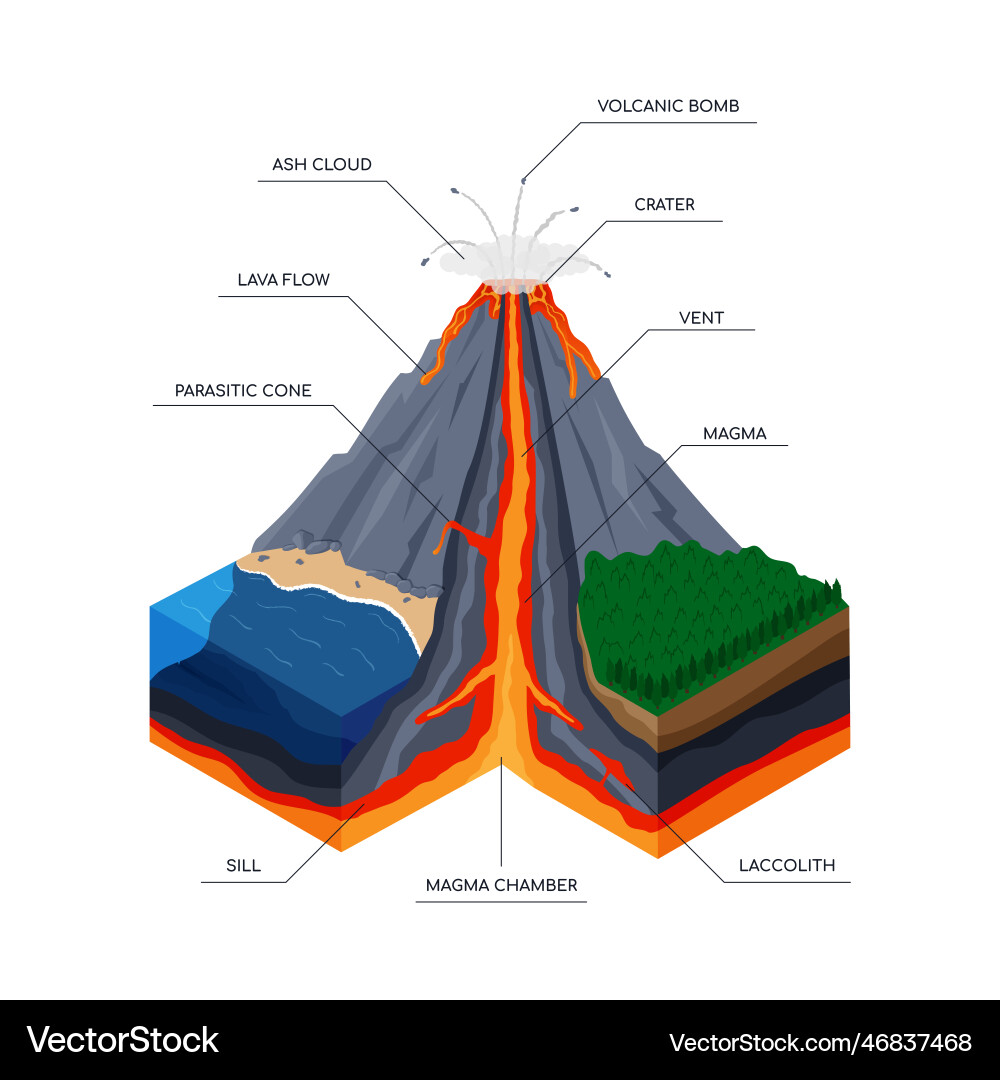
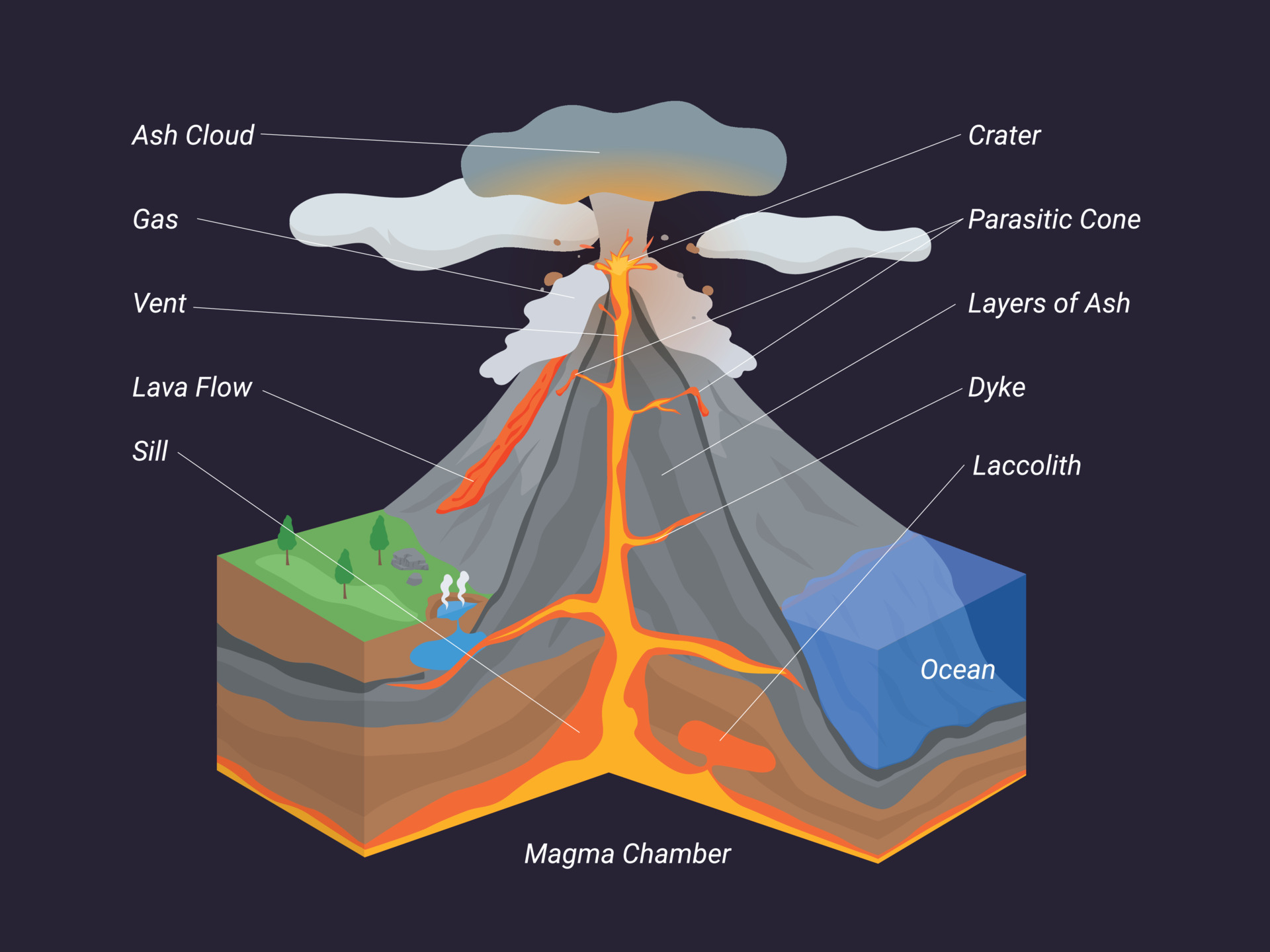
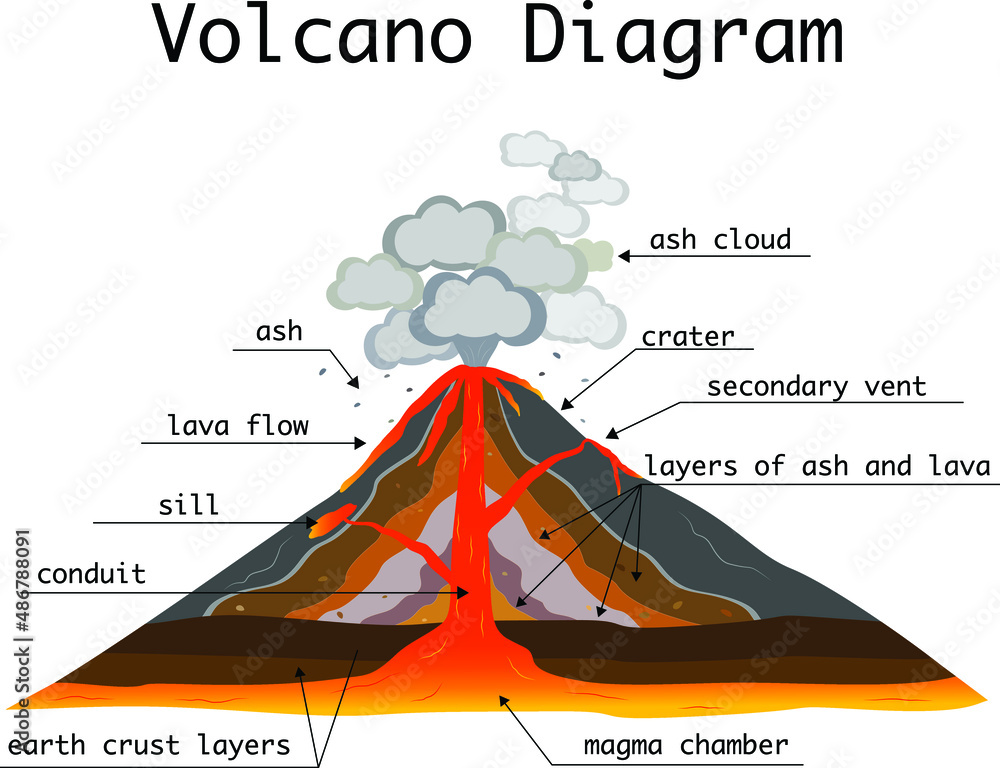
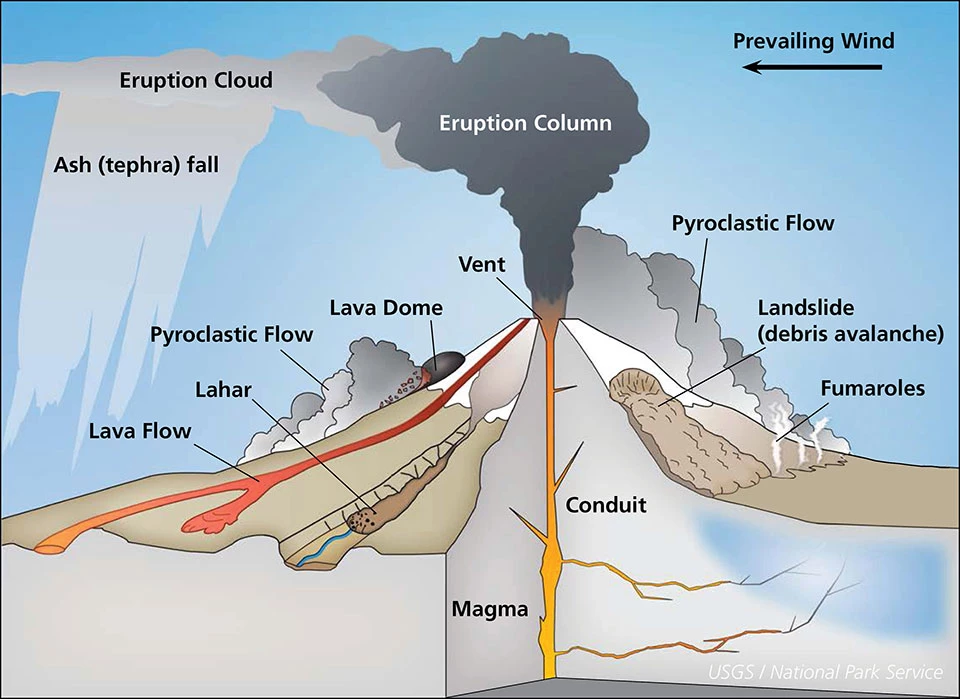
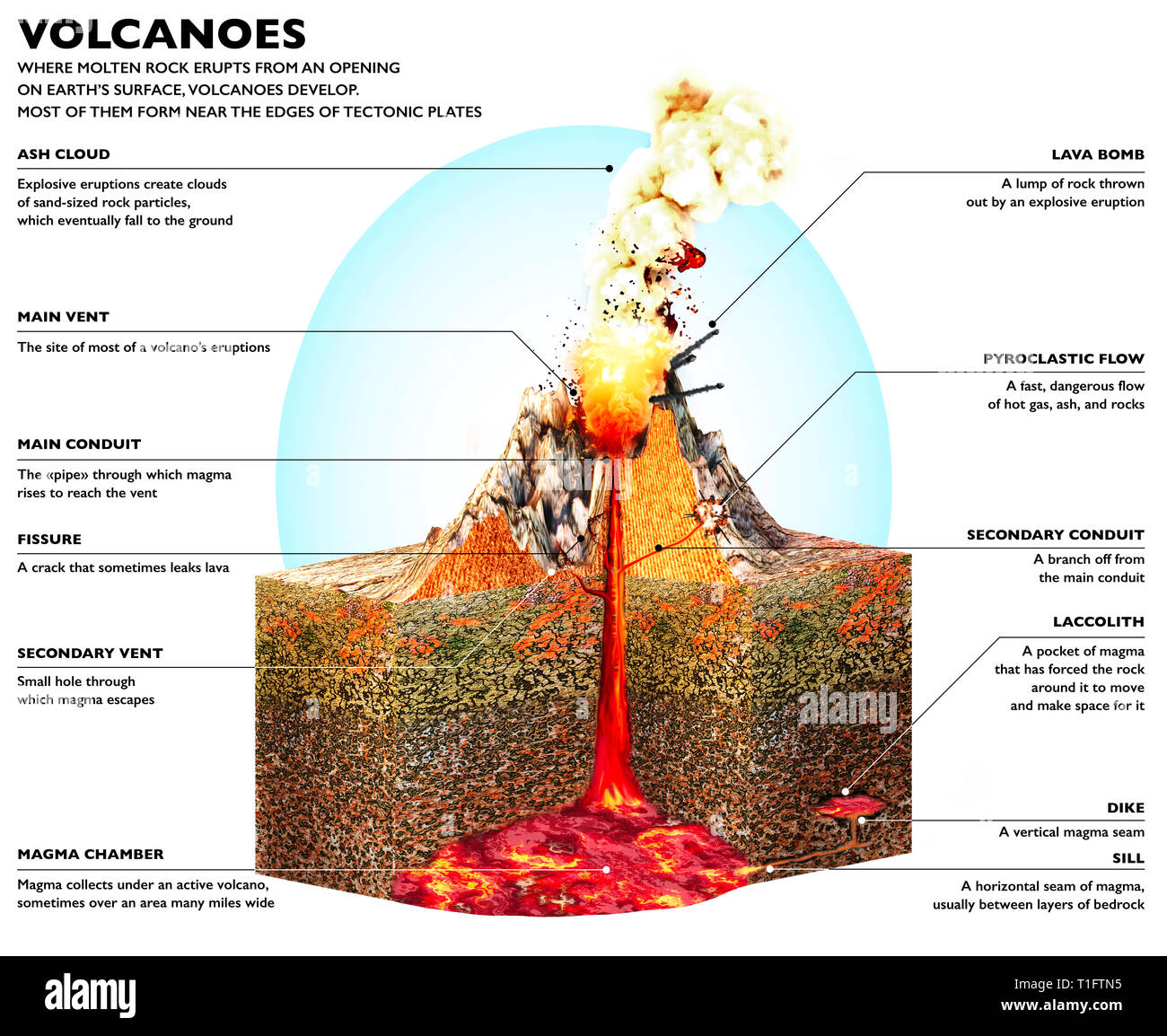
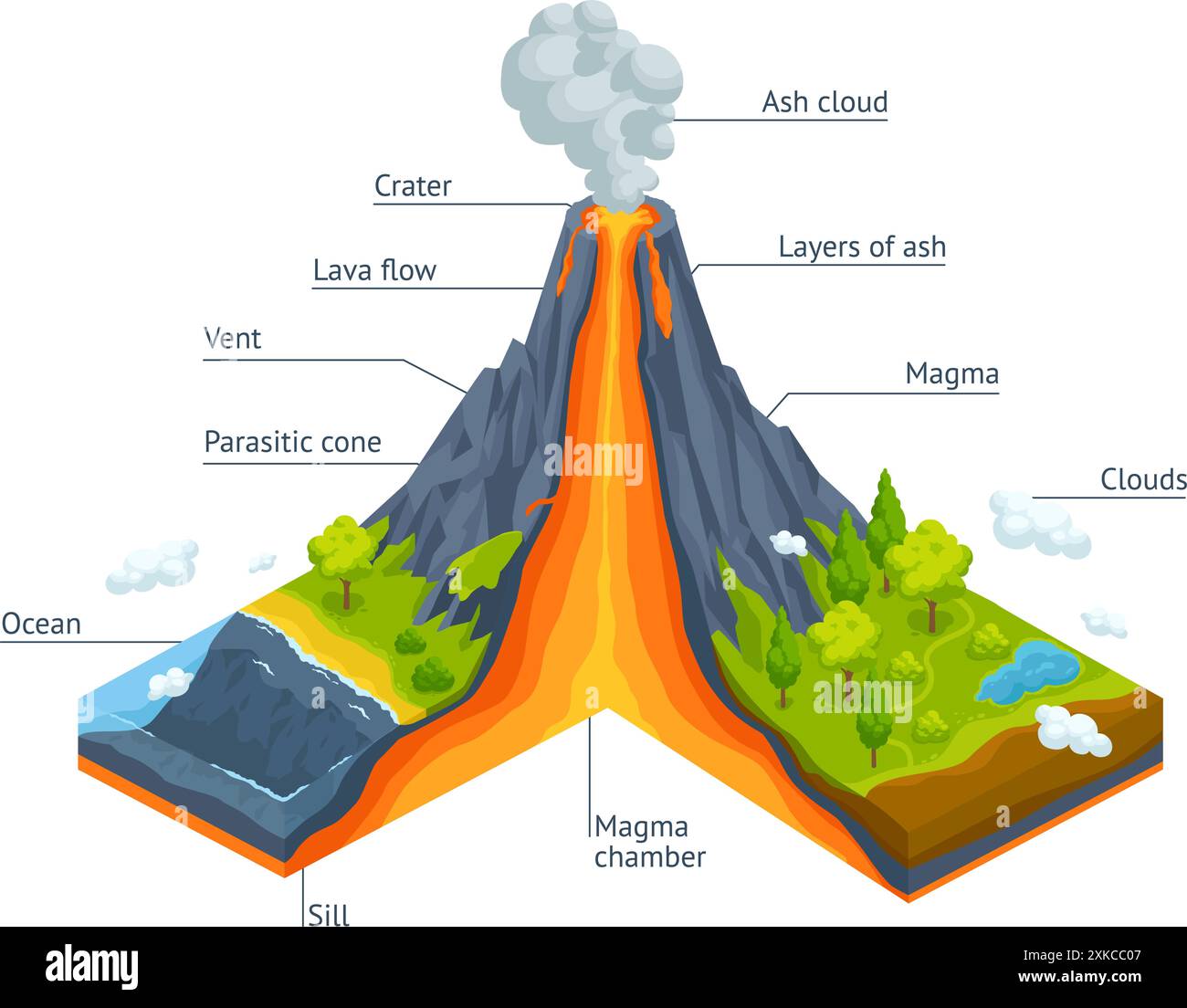
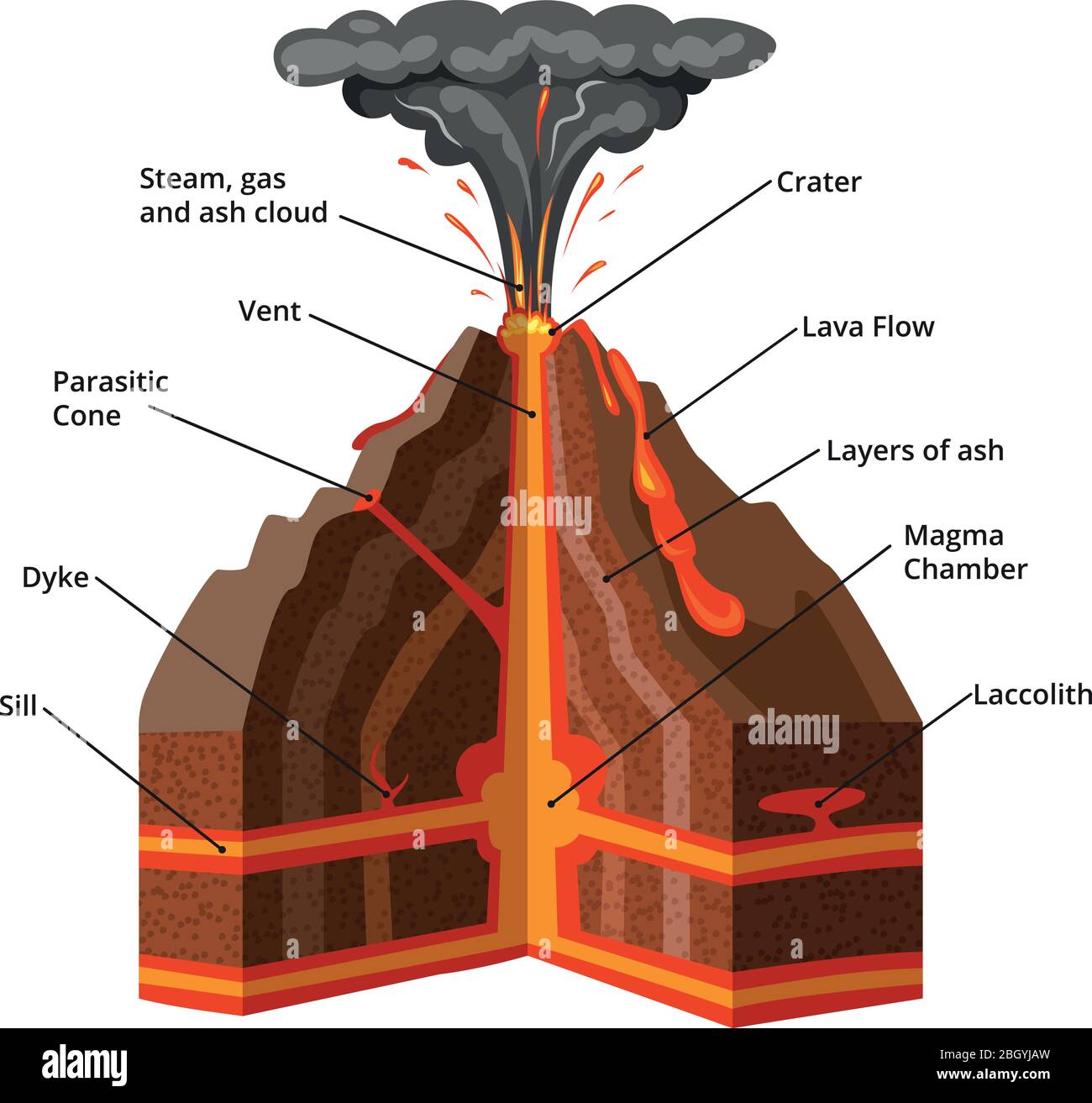
The cross‑section diagram is a powerful tool that reveals the internal structure of a volcano. On the left side of the image, you can see the magma chamber—an underground reservoir that stores molten rock. Above it, the magma ascends through a vertical conduit that connects to the surface vent. As the magma rises, it can fracture surrounding rocks, forming a series of dykes and sills. At the surface, the eruptive vent appears as a fissure or crater from which lava, ash, and gases are expelled.
Below the magma chamber lies the country rock—older, solidified rock that has been partially melted or fractured by the volcanic activity. The surrounding layers of ash, pumice, and lava flows are visible in the diagram, showcasing how successive eruptions build the volcanic edifice. By studying these layers, geologists can reconstruct the volcano’s eruptive history and predict future activity.
3. Dormant vs. Active Volcanoes
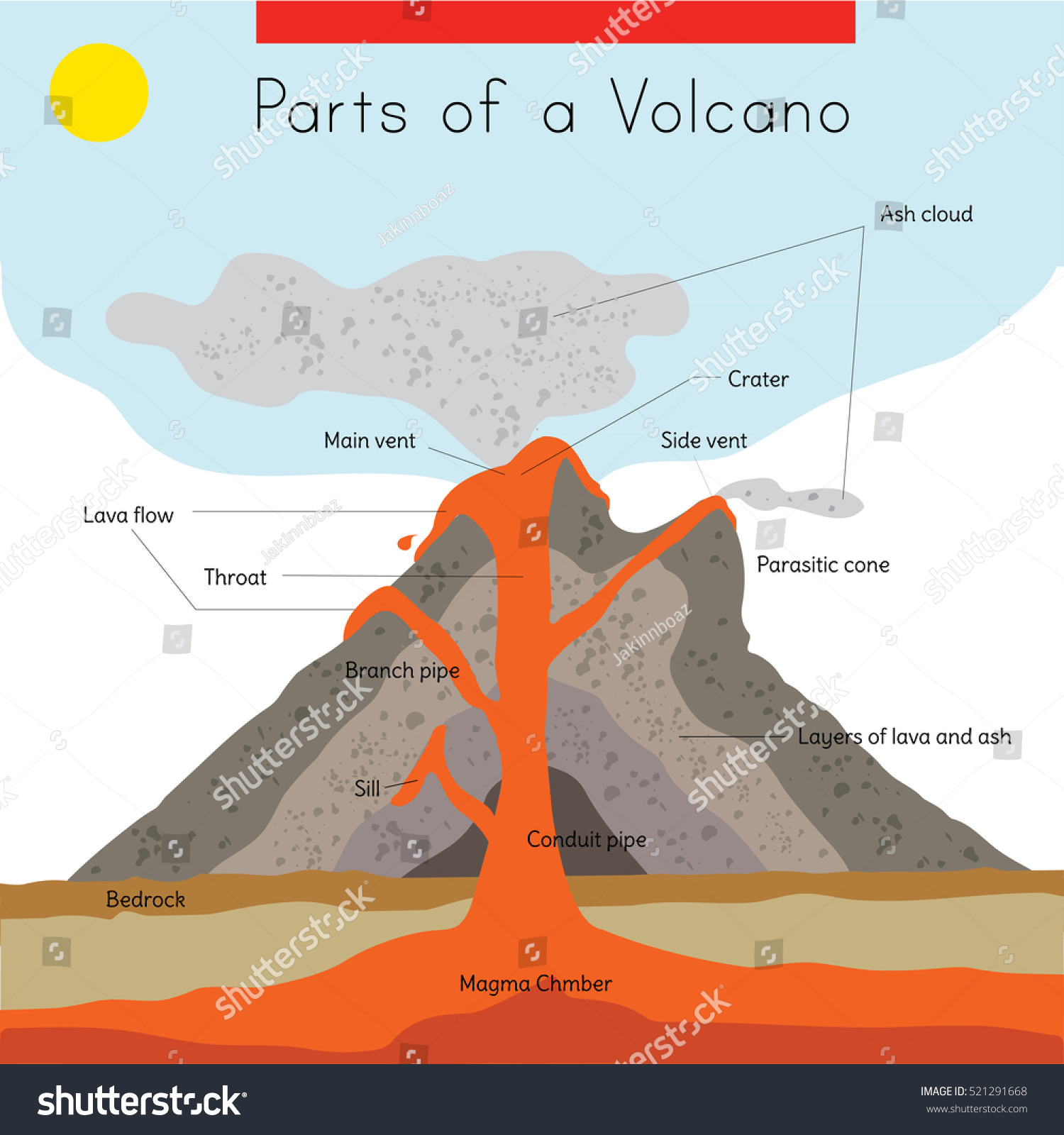
The second diagram focuses on the structure of a dormant volcano, highlighting the same fundamental components but with key differences. In a dormant state, the magma chamber is no longer actively feeding the surface, and the vent is sealed by solidified lava or ash. The surrounding layers show a clear sequence of past eruptions, each with distinct characteristics such as ash thickness or lava composition.

Active volcanoes, on the other hand, exhibit ongoing seismicity, gas emissions, and occasional minor eruptions. Monitoring these changes helps scientists determine whether a dormant volcano might resume activity. By comparing the two diagrams, readers can easily differentiate between the visible signs of an active system—such as a partially open vent and fresh lava flows—and a dormant system where the structure remains intact but inactive.
4. Key Volcanic Features
Volcano diagrams typically label several critical features:
- Magma Chamber – The underground reservoir where magma collects before ascending.
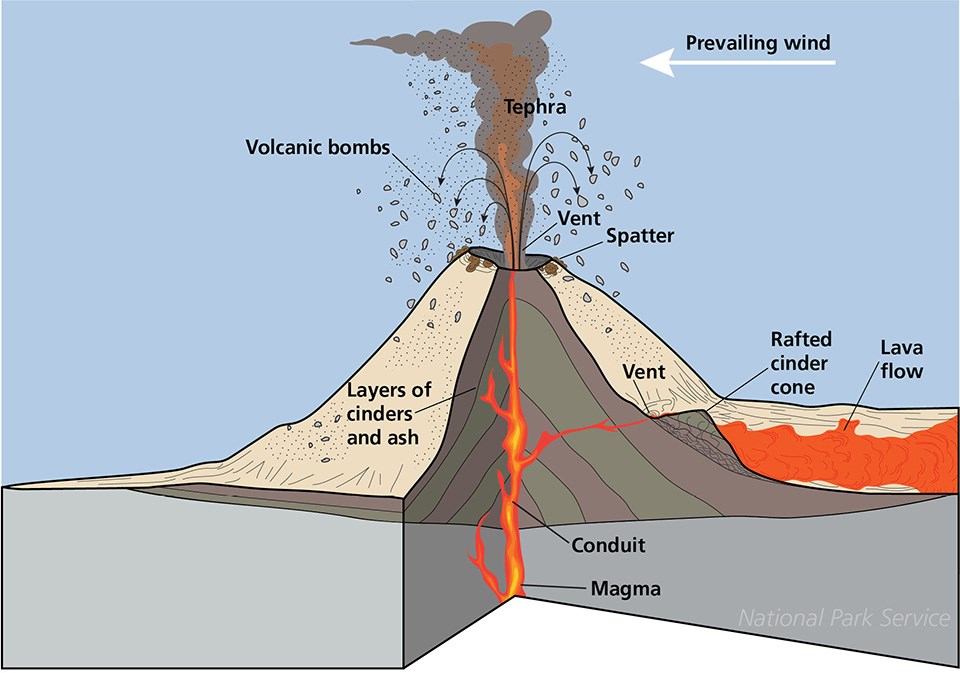
- Conduit – The pathway through which magma travels from the chamber to the surface.
- Vent/Crater – The opening at the summit where eruptions occur.
- Tephra Layers – Deposits of ash, pumice, and volcanic bombs that accumulate over time.
- Lava Flows – Hardened basaltic or andesitic lava that shapes the volcano’s flanks.
- Subsidence Zones – Areas where the ground sinks due to magma withdrawal or collapse.
By identifying these components, students and researchers can interpret the geological processes at work and assess the potential hazards associated with each type of volcano.
5. Eruption Mechanisms
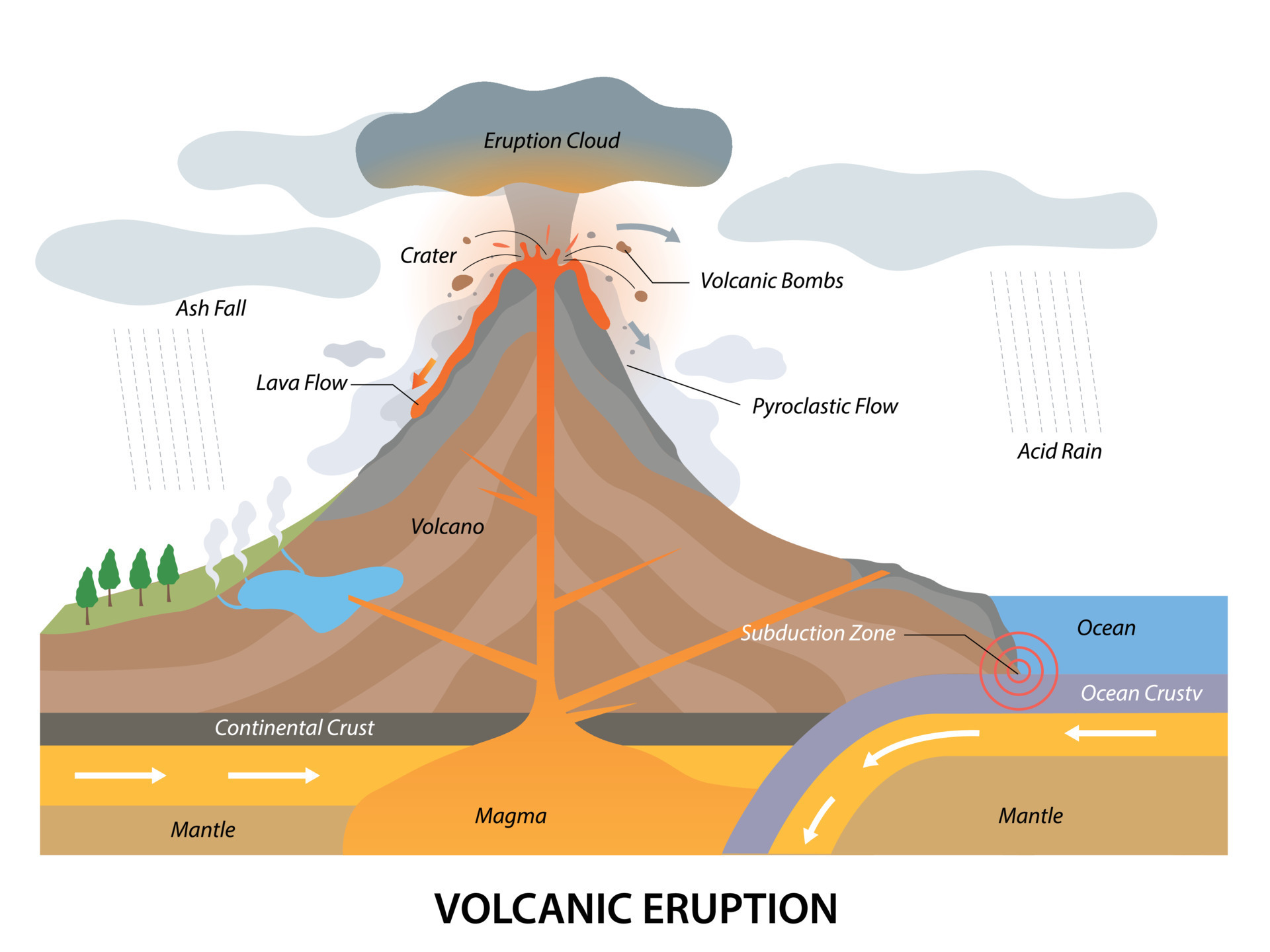
Volcano diagrams also illustrate the mechanics behind different eruption styles. Basaltic eruptions produce fluid lava flows that travel great distances, while andesitic or rhyolitic eruptions generate explosive events that eject ash plumes into the atmosphere. The diagram’s layered structure demonstrates how varying magma viscosity, gas content, and pressure influence the eruption’s intensity and duration. Understanding these mechanisms helps predict the scale of an eruption and the type of hazards—such as pyroclastic flows, lahars, or ashfall—that may affect surrounding communities.
6. Real‑World Applications and Monitoring
Modern volcanology relies heavily on the interpretation of diagrams like the ones above. Seismologists map earthquake swarms that signal magma movement, while gas spectrometers measure emissions such as CO₂ and SO₂ to gauge magma degassing. Satellite imagery and ground‑based remote sensing provide real‑time updates on temperature changes and deformation of the volcanic edifice. By correlating these data with the structural information in a cross‑section diagram, scientists can build predictive models, issue evacuation notices, and develop disaster‑response plans.
Educationally, volcano diagrams are also invaluable. They enable students to visualize complex geological processes, fostering a deeper understanding of Earth’s dynamic systems. Instructors can use these images to create interactive lessons, quizzes, and laboratory simulations that illustrate how volcanic activity shapes the planet’s landscape.
Conclusion
Diagrams of volcanoes, whether depicting a cross‑section of an active volcano or the labeled structure of a dormant one, are essential tools for both scientific research and public education. They distill complex subsurface processes into a clear visual format, allowing geologists to track magma movement, assess eruption risks, and communicate findings to policymakers and the general public. By mastering the interpretation of these diagrams, readers gain a comprehensive view of how volcanoes form, evolve, and pose challenges—and how we can better prepare for their inevitable eruptions.
Volcano Drawing And Labels

Volcano Drawing And Labels
Composite Volcano Diagram Crust

Composite Volcano Diagram Crust
Lava Volcano Diagram Volcano – A Mountain That Spits Fire? Volcano

Lava Volcano Diagram Volcano – A Mountain That Spits Fire? Volcano
Volcano Diagram Hi-res Stock Photography And Images - Alamy
Volcano diagram hi-res stock photography and images - Alamy
How Do Erupting Volcanoes Change Landforms At Maria Baum Blog
How Do Erupting Volcanoes Change Landforms at Maria Baum blog
Volcano Diagram For Kids
Volcano Diagram For Kids
Volcano Diagram For Kids

Volcano Diagram For Kids
Volcano Diagram For Kids
Volcano Diagram For Kids
Volcano Diagram Hi-res Stock Photography And Images - Alamy
Volcano diagram hi-res stock photography and images - Alamy
Lava Volcano Diagram
Lava Volcano Diagram
Volcano Crater Diagram

Volcano Crater Diagram
Volcano Diagram For Kids

Volcano Diagram For Kids
Inside A Volcano Diagram – Volcano Eruption Columns – YBBYG

Inside A Volcano Diagram – Volcano Eruption Columns – YBBYG
Explained How Volcanic Hazards Diagram

Explained How Volcanic Hazards Diagram
Volcanic Crater Diagram Volcanic Landforms, Volcanoes And Plate

Volcanic Crater Diagram Volcanic Landforms, Volcanoes And Plate
Anatomy Of Volcano Anatomy Of A Volcano

Anatomy Of Volcano Anatomy Of A Volcano
Anatomy Of A Volcano - Volcanoes, Craters & Lava Flows (U.S. National
Anatomy of a Volcano - Volcanoes, Craters & Lava Flows (U.S. National ...
Shield Volcano Labelled Diagram – QVHX

Shield Volcano Labelled Diagram – QVHX
Volcano Parts And Eruption Diagram With Labels Stock Vector | Adobe Stock
Volcano parts and eruption diagram with labels Stock Vector | Adobe Stock
Volcano Diagram To Label Volcano Eruption Cut Out Stock Images
Volcano Diagram To Label Volcano Eruption Cut Out Stock Images
Volcano Anatomy | BioRender Science Templates

Volcano Anatomy | BioRender Science Templates
Volcano Diagrams – Artofit

Volcano diagrams – Artofit
Composite Volcano Diagram Crust

Composite Volcano Diagram Crust
Volcano Diagram Worksheets 1200x630

Volcano Diagram Worksheets 1200x630
Anatomy Of A Volcano - Volcanoes, Craters & Lava Flows (U.S. National
Anatomy of a Volcano - Volcanoes, Craters & Lava Flows (U.S. National ...
Cross Section Of A Volcano Diagram
Cross Section Of A Volcano Diagram
Anatomy Of Volcano

Anatomy Of Volcano
Volcanic Caldera Diagram
Volcanic Caldera Diagram
1C.1 Volcano Anatomy And Explosivity – Environmental Geology
1C.1 Volcano Anatomy and Explosivity – Environmental Geology
Volcano Cross Section Diagram Including All Parts Magma Volcano
Volcano Cross Section Diagram Including All Parts Magma Volcano
Volcano Anatomy Diagram Vector Illustration Stock Volcano Diagram

Volcano Anatomy Diagram Vector Illustration Stock Volcano Diagram
Volcano Cross Section With Structure Description In Side View Outline

Volcano Cross Section With Structure Description In Side View Outline ...
Enter The Volcano , Volcano Manor Location And Walkthrough – NMSMJK

Enter The Volcano , Volcano Manor Location and Walkthrough – NMSMJK