Bilirubin Metabolism: The Ultimate Red‑Light Comedy Guide!
Ever wondered why your body turns dead red cells into a bright yellow pigment that can make you a superstar on a beach? Buckle up, because in this guide we’ll decode the bilirubin metabolism diagram with a splash of humor, so you’ll laugh, learn, and maybe even keep a tiny bottle of “liver juice” in your fridge.
What is Bilirubin? The Red Riddle
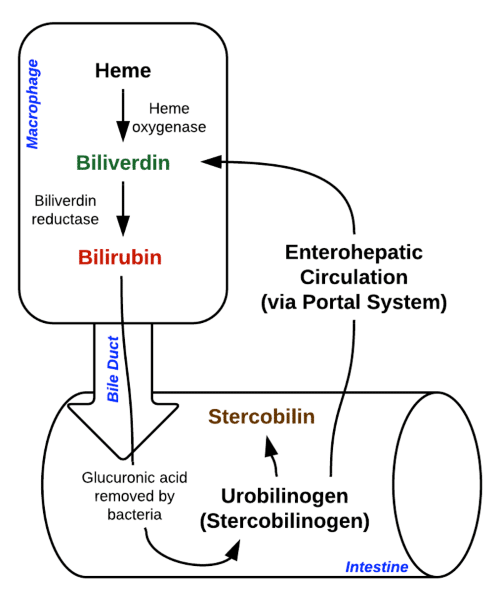
Bilirubin is the result of hemoglobin’s “exit interview” after it has served its purpose in red blood cells. When red cells die, hemoglobin breaks down into heme, and that heme is then converted into biliverdin, a greenish pigment. Biliverdin is quickly turned into bilirubin—our body’s favorite yellow splash. Think of it as the life-after‑cell version of a disco ball: it’s bright, it shines, but if it doesn’t get processed properly, you’ll have a real party problem.
From Hemoglobin to the Livers: A Journey
Picture a red‑eyed, exhausted red blood cell on its last day. It’s been circulating for about 120 days, and now it’s time to retire. As it enters the spleen, it’s smashed into heme. Heme is handed over to the enzyme heme oxygenase, which releases iron, carbon monoxide, and the green biliverdin. Biliverdin is the “pre‑party” to bilirubin, and then the enzyme biliverdin reductase flips the green into the golden yellow.
But here’s the twist: bilirubin is fat‑soluble and basically a toxic, sticky ball that can’t sit in the bloodstream like a proper party guest. That’s why the liver steps in as the ultimate bouncer.

In the liver, bilirubin is conjugated with glucuronic acid by the enzyme UDP‑glucuronosyltransferase, turning it into a water‑soluble “Biliverdin‑glucuronide.” This conjugated bilirubin can now mingle in the bloodstream without causing a chemical fire. It’s like giving your yellow party guest a passport, letting it travel to the intestines without causing trouble.
The Great Pigment Parade: Conjugation and Transport
Once conjugated, the bilirubin travels in the blood to the gallbladder via bile ducts. Think of the gallbladder as the ultimate storage unit where the pigment can chill before it heads to the gut. When you eat, the gallbladder contracts, releasing bile (with our conjugated bilirubin) into the duodenum, the first part of the small intestine.
At this point, the bilirubin is a key player in digestion, aiding in the emulsification of fats. It’s a bit like a dance partner who helps fats twirl across the intestinal floor, making sure they’re properly broken down and absorbed.
The Exit Strategy: Excretion into the Gut
Now the real drama begins. In the colon, gut bacteria convert conjugated bilirubin into urobilinogen, which splits into two: urobilin and stercobilin. Urobilin is reabsorbed into the bloodstream and eventually excreted via the kidneys, giving urine its characteristic yellow hue. Stercobilin, however, stays in the colon and gives stool its brown color.

If the liver fails to conjugate bilirubin (think of the bouncer missing its job), unconjugated bilirubin floods the bloodstream, leading to jaundice—a condition where skin and eyes turn a sunny yellow. It’s the ultimate “do not disturb” sign that your liver needs some attention.
When Things Go Wrong: Clinical Chaos
Common problems include Gilbert’s syndrome (a mild enzyme deficiency that causes a mild yellowing), Crigler‑Najjar syndrome (a rare, severe conjugation defect), or liver diseases like hepatitis or cirrhosis. In each case, bilirubin levels can skyrocket, and the body’s color palette shifts dramatically.
Medical intervention varies from simple monitoring (as in Gilbert’s) to liver transplantation (for Crigler‑Najjar Type II). The key takeaway: keep your liver happy by avoiding excessive alcohol, staying hydrated, and getting regular check‑ups.
Conclusion
In short, bilirubin metabolism is a finely tuned, color‑coded ballet that turns old red cells into a yellow glow, only to gracefully exit into the gut and give our bodies their characteristic hues. By understanding each step—hemoglobin breakdown, conjugation, transport, and excretion—we can appreciate the elegance of our internal chemistry, and maybe even chuckle at the way our bodies juggle these pigmentous tasks. Stay jaundice‑free, and keep your liver dancing to the right tune!
Bilirubin Metabolism - Unconjugated - Jaundice - TeachMePhysiology
Bilirubin Metabolism - Unconjugated - Jaundice - TeachMePhysiology
Bilirubin Metabolism Pathway Flowchart

Bilirubin Metabolism Pathway Flowchart
Bilirubin Metabolism Pathway Flowchart

Bilirubin Metabolism Pathway Flowchart
Schematic Illustration Of Bilirubin Metabolism. Aging Red Blood Cells

Schematic illustration of bilirubin metabolism. Aging red blood cells ...
Bilirubin Metabolism Flow Chart

Bilirubin Metabolism Flow Chart
Bilirubin Metabolism Pathway Flowchart

Bilirubin Metabolism Pathway Flowchart
Schematic Representation Of Bilirubin Metabolism. Heme Released From

Schematic representation of bilirubin metabolism. Heme released from ...
Bilirubin Metabolism Process Diagram Medical Vector Image

Bilirubin metabolism process diagram medical Vector Image
Bilirubin Metabolism - MEDizzy

Bilirubin Metabolism - MEDizzy
BILIRUBIN METABOLISM | PDF

BILIRUBIN METABOLISM | PDF
Bilirubin Metabolism Flow Chart

Bilirubin Metabolism Flow Chart
Bilirubin Metabolism Flow Chart 17+ Images About Bilirubin On

Bilirubin Metabolism Flow Chart 17+ Images About Bilirubin On
Bilirubin Metabolism | Innere Medizin, Anatomie Und Physiologie

Bilirubin metabolism | Innere medizin, Anatomie und physiologie ...
Bilirubin Metabolism Flow Chart 17+ Images About Bilirubin On

Bilirubin Metabolism Flow Chart 17+ Images About Bilirubin On
Bilirubin Metabolism Pathway Flowchart

Bilirubin Metabolism Pathway Flowchart
PPT - Bilirubin Metabolism & Jaundice PowerPoint Presentation, Free

PPT - Bilirubin Metabolism & Jaundice PowerPoint Presentation, free ...
Bilirubin Metabolism Pathway Diagrams - Google Search | Jaundice

Bilirubin metabolism pathway diagrams - Google Search | Jaundice ...
Metabolism Of Bilirubin | Download High-Resolution Scientific Diagram

Metabolism of Bilirubin | Download High-Resolution Scientific Diagram
Bilirubin Metabolism

Bilirubin metabolism